
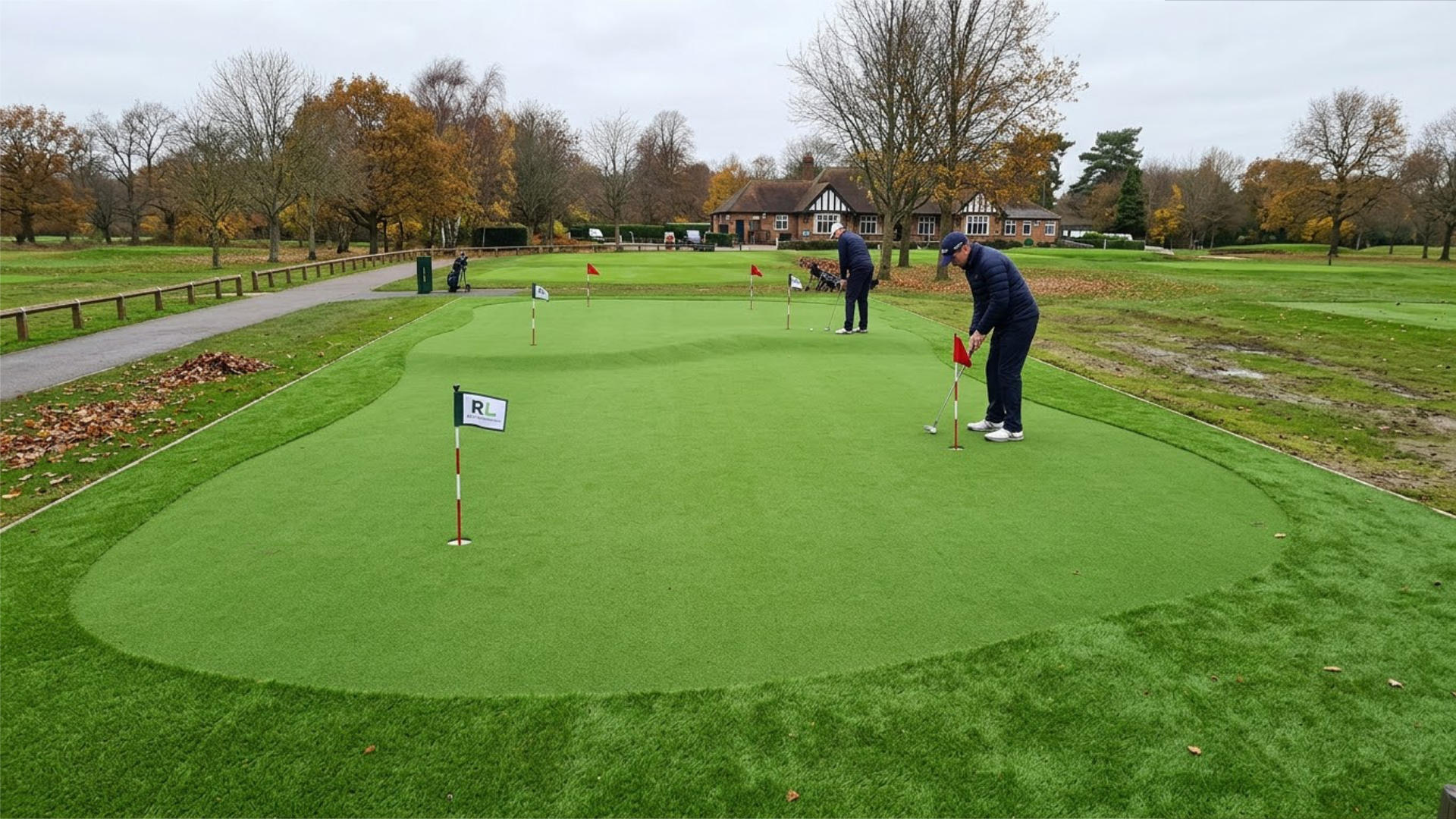
As the clocks go back and natural greens head into winter mode, golf clubs face months of soggy practice areas and temporary greens. Here is how an artificial practice putting green keeps members practising all winter, and what to think about when planning one.
At RL Golf Construction, we know that late autumn is when golf clubs feel the limits of natural turf most. Rain, frost, and shorter days take their toll, and practice areas are often the first to suffer. Many clubs move to temporary winter greens or close practice areas entirely to protect the turf, just when members want to keep their short game sharp.
A dedicated artificial practice putting green changes that. It gives members and visitors a reliable, year-round facility to practice the part of golf that most improves scores.
Why Winter Is the Real Test
Natural greens are at their most vulnerable between October and spring. Prolonged rain leads to waterlogging, frost restricts play, and heavy footfall in wet conditions causes wear that needs repairing.
A properly constructed synthetic green is built to handle exactly these conditions:
- All-weather availability: Engineered greens drain quickly and remain playable after rain, frost or heavy use.
- Consistent performance: Modern golf turf systems reproduce realistic ball roll and pace, so members can practise speed, line and lag putting on a repeatable surface.
- Low maintenance: No mowing, fertilising or frequent topdressing, which frees your greenkeeping team to focus on the main course.
- Durable: A quality installation resists wear from high footfall, frequent practice and equipment.
Getting the Groundwork Right
The performance of any practice green starts below the surface. As we saw on our recent 70m² private green on East Yorkshire’s heavy clay, the right excavation, drainage and foundation are essential for a stable surface and reliable ball roll.
For golf clubs, our approach includes:
- Site assessment: We evaluate soil, drainage, sun exposure, surrounding landscaping and intended use.
- Sub-base and drainage: Engineered sub-base layers and linear drainage for fast runoff and long-term stability.
- Professional surfacing: Premium putting turf selected for pile height, face weight and stitch density to match your desired green speeds and feel.
- Edge detailing: Precision edging, stone or resin pathways and neat borders to integrate the green into your club landscape.
Where a Practice Green Can Work
Greens can be built almost anywhere on club grounds. Popular options include:
- Member practice greens next to the clubhouse
- Short game areas for coaching clinics and junior development
- Warm-up greens for competitions and match days
- Low-maintenance alternatives where natural turf is impractical
Clubs can also add extras such as hole cups, pins, alignment guides, distance markers and lighting for extended hours, which is particularly useful during the darker winter months.
Simple Winter Care
Although maintenance is minimal compared with natural greens, a small routine keeps the surface performing at its best through autumn and winter:
- Weekly brushing to keep the pile upright and even
- Regular leaf sweeping and debris removal
- Periodic checks of seams and edges
- An annual deep clean and infill top-up where required
We provide a tailored maintenance plan and can train your grounds staff or offer scheduled maintenance packages.
Start Planning Your Project
To help us prepare a site-sensitive proposal, tell us:
- The approximate space available (m²)
- Your preferred features, such as a single green, multi-hole layout, chipping area or lighting
- Your budget range and timeline
We’ll come back with layout options, performance targets and a clear cost estimate so your club can decide with confidence.
If your club is ready to give members a practice facility that performs in every season, contact the RL Golf Construction team to arrange a site consultation.